The Homeowner’s Guide to Complete Lawn Replacement: Sod vs. Seed

Every homeowner dreams of a lush, carpet-like green lawn. However, after years of harsh Canadian winters, heavy foot traffic, and relentless weed invasions, many lawns reach a point of no return. When patching bare spots and applying fertilizer no longer work, it’s time to consider a complete lawn replacement.
But should you plant grass seed and wait, or should you install instant sod?
This guide breaks down how to diagnose a failing lawn, compares seeding versus sodding, and explains why proper soil preparation is the secret to a lifetime of healthy grass.
1. The 50% Rule: Is Your Lawn Beyond Saving?
Before spending time and money on lawn care products, you need to determine if your lawn can be salvaged or if it requires a complete restart.
We recommend using the 50% Rule:
- Under 50% Damaged: If weeds, crabgrass, and bare patches cover less than half of your yard, you can likely restore it through aggressive dethatching, aerating, topdressing, and overseeding.
- Over 50% Damaged: If more than half of your yard is dead, infested with weeds, or overtaken by wild creeping bentgrass, trying to save it is a losing battle. The most cost-effective and time-saving solution is a complete lawn replacement.
2. Seeding vs. Sodding: Which is Best?
When replacing your lawn, you have two primary options: sowing grass seed or laying pre-grown sod. Here is how they compare across key categories:
Timeline & Usability
- Grass Seed: Takes 10 to 14 days to germinate, and up to 10 to 12 weeks of careful nurturing before it can handle light foot traffic. You won’t have a fully established, durable lawn until the following season.
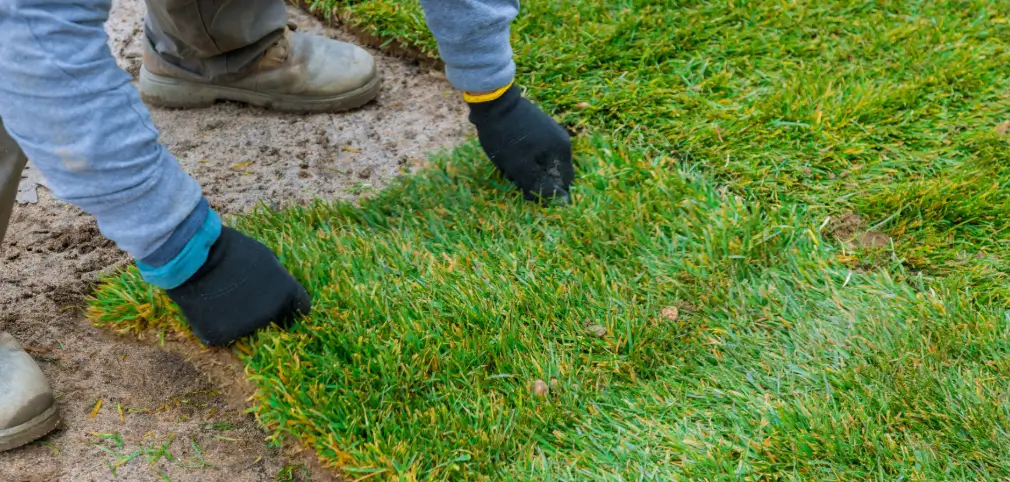
- Sod: Offers an instant green lawn in a single day. Within 2 to 3 weeks, the roots knit into the soil, making it fully ready for kids, pets, and backyard gatherings.
Success Rate & Weed Control
- Grass Seed: Highly vulnerable to being washed away by heavy rain, eaten by birds, or choked out by dormant weed seeds in the soil.
- Sod: Grown professionally on local turf farms, sod is dense and weed-free. Once installed, it acts as a natural barrier, preventing weed seeds from getting the sunlight they need to germinate.
3. The Secret to Success: Soil Preparation
Many homeowners believe that laying sod is as simple as rolling out a carpet. In reality, soil preparation is 90% of the battle.
In regions like York Region, the soil is notoriously heavy in clay. Clay soil compacts easily, suffocating grass roots and preventing water drainage. If you lay new grass directly over compacted clay, the roots will fail to establish, and the sod will die within a year.
A professional installation involves:
- Removing the Old Turf: Excavating the old, dead grass and weed root systems.
- Rototilling: Breaking up the compacted subsoil to a depth of 3 to 4 inches to improve aeration and drainage.
- Adding Premium Topsoil: Spreading a rich, organic triple-mix topsoil to feed the new roots.
- Grading: Leveling the ground to ensure water drains away from your home’s foundation.
For homeowners dealing with compacted clay soil or severe weed infestations, hiring a professional service for lawn replacement in Vaughan ensures the ground is properly graded and rototilled before the new turf is laid.
4. Post-Installation Care: Watering is Key
Once your new lawn is installed, your primary job is watering.
- Weeks 1–2: Water daily (sometimes twice a day in hot summer months) to keep the sod and the underlying soil consistently moist. The goal is to keep the soil damp but not muddy.
- Week 3 and Beyond: Once the roots are established (you can test this by gently tugging on a corner of the sod—if it resists, roots have formed), you can transition to deep, less frequent watering (2 to 3 times a week) to encourage deep root growth.
Conclusion
A complete lawn replacement is an investment in your home’s curb appeal, usability, and overall value. While seeding is cheaper upfront, sodding provides a guaranteed, weed-free, instant result that saves you months of labor and frustration.